




The History of the Minimoog Model D
A History of the Minimoog by JoE Silva
Geographically you skirt the tip of Cayuga Lake by heading north out of Ithaca along state road 96. It’s a beautiful trip over rolling hills through some of the Finger Lakes’ most lush terrain. When you arrive 20 minutes later in Trumansburg New York, you’ll find the large blue plaque in the center of the village. It reads:
“At this site in 1964, innovator Robert Moog developed and produced the first commercial modular synthesizer, changing the course of music history.”
That historical marker sits outside the Little Venice restaurant, where you can find locals enjoying a mix of Italian American cuisine and thick pizzas. But more than half a century ago, this humble brick building was the fulcrum of electronic sound.
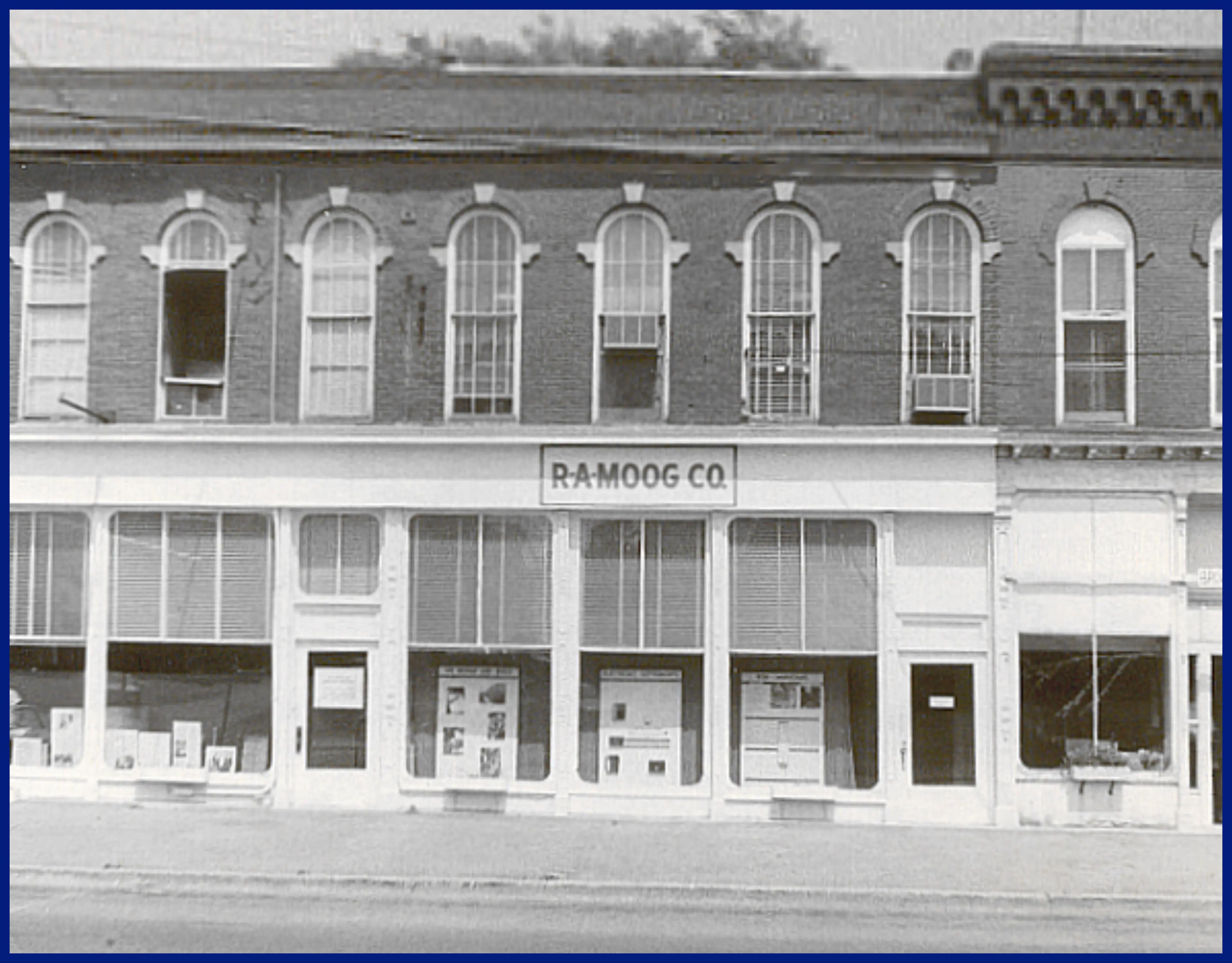
“A lot of the old timers that come in will talk about when they were in Trumansburg High and they would wait across the street and watch these big rock stars walk into this building.” says owner Jessie Gardner.
In the decades since the smell of solder filled the air inside 49 East Main Street, the space has acted as another eatery and a video store. Now the only bleeps you’ll here are coming from the cash registers or the commercials that run on the collection of TVs that sit above the bar. But back in 1969 when the R.A. Moog company was struggling to stay financially afloat, while it pushed as many pieces of modular synthesizer gear possible out to awaiting musicians all across the world.
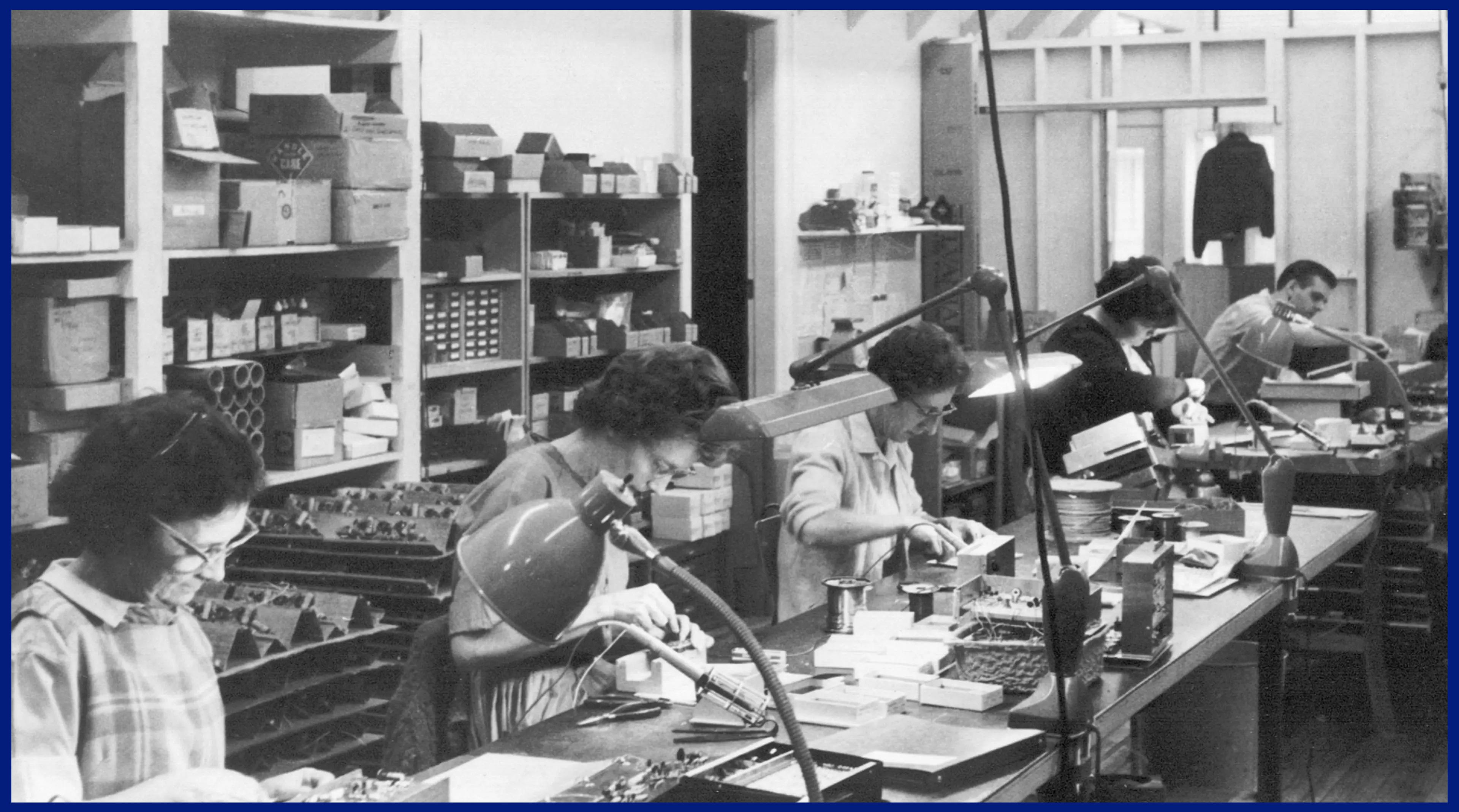
Having opened up shop in 1963 Robert Moog had tried a number of strategies to keep his balance sheet out of the red by the time things started to get dire towards the end of the decade. His in-house staff of whip smart engineers and the locals who assembled the equipment had grown to near 50 people, and operations still weren’t able to keep up with demand. While the back orders mounted, a young electronics whiz named Bill Hemsath came up with idea one day during his lunch break.
“My office was up on the second floor and I was next to the Graveyard. That’s where Bob tossed stuff that was junk, but maybe we could use it someday.”
As engineers do, Hemsath began to tinker with an idea that he had for a cut down version of the big modular units that the company had become known for since the success of Wendy Carlos’ “Switched On Bach.” Grabbing spare parts from whatever was laying around, he wound up cobbling together what would effectively be a desktop version of the mammoth synths that had put Moog on the map.
“There was a 5-octave keyboard but (Moog) would steal key caps off of the treble end for replacing chipped and broken ones. (So) the number of remaining key caps determined the size of the keyboard and it turned out to be 3 octaves. We’d take the upper console, cut it down to match and with a little bit of fudging, it fit. I could get…how many modules was that? About a half a dozen across. I was able to find everything in the junk except for a 901, an oscillator controller. I had to steal that from the stockroom.”
The basics for creating some rudimentary sounds were all hard wired together, but Hemsath saw an opportunity to add one final touch.
“There was just a little bitty notch left in the left cheek and I needed something there. Well, how about a slide pod? That would fit. So the forerunner of the wheel was that slide pod just to fill in the space in the left cheek.”
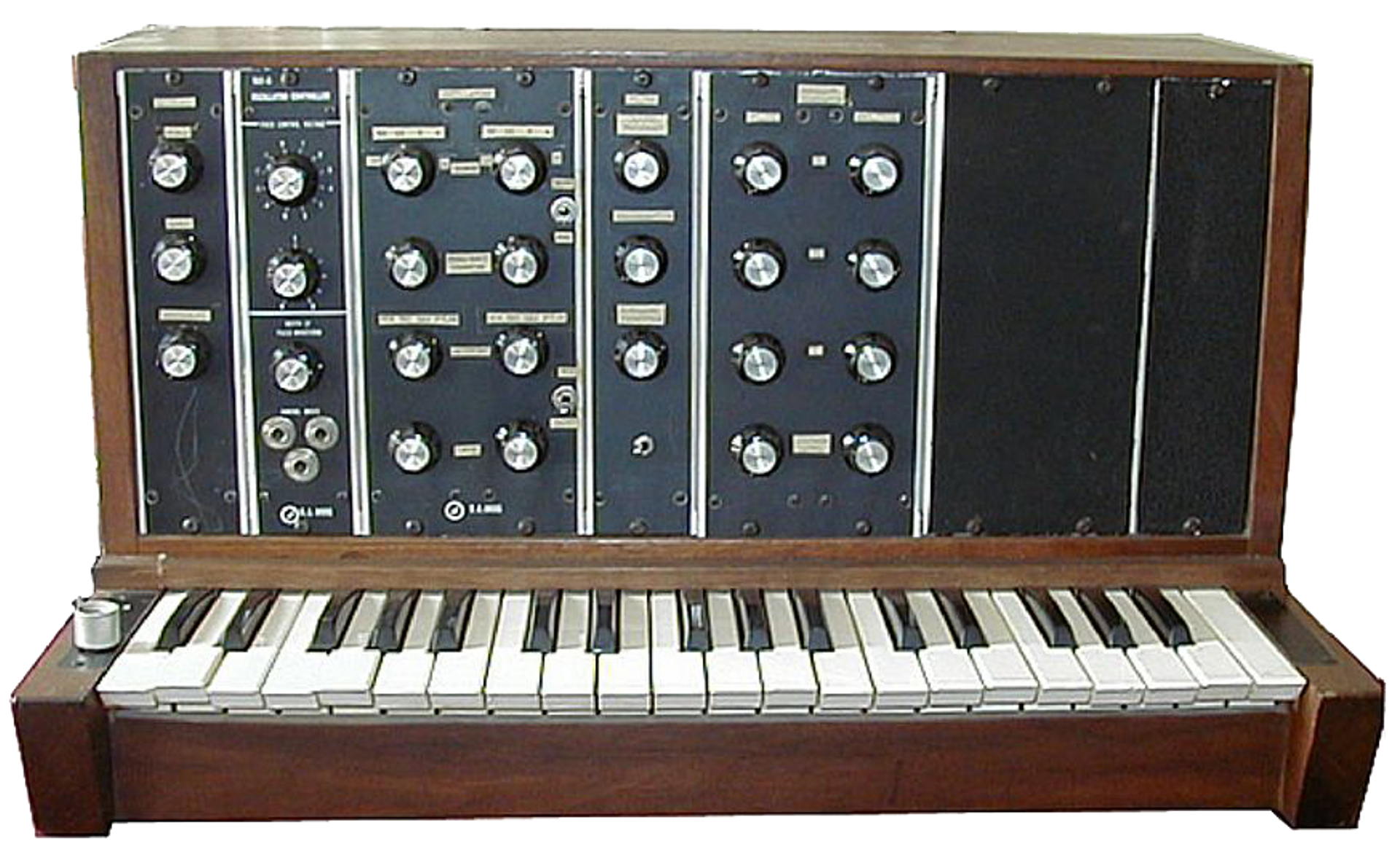
The “Min Moog,” (or the Model A Min as it ultimately known…) as Hemsath could dub his creation, would ultimately become the prototype for the company’s most successful product – the Minimoog. Selling his idea to the boss was another matter. Bob Moog had always felt that the strength of his synthesizers was that there was no restriction on how the individual modules could be patched together. The long cables that crisscrossed the face of his equipment would result in complex and inventive sounds that weren’t predefined by the manufacturer. Smaller, pre-patched units with a reduced set of options weren’t particularly interesting to him. But as he was busy figuring out ways to keep the Moog ship afloat, he more or less allowed Hemsath’s experiment to go forward.
Back down the road at Cornell University, musicians Steve Drews and David Borden had put together one of the first electronic ensembles – Mother Mallard’s Portable Masterpiece Company. With their friend Linda Fisher (later to be replaced by Judy Borsher), the trio began creating intricate synthesizer pieces using equipment that they were essentially test driving for Moog back in the recording studio that the company had set up in the Trumansburg factory. They would come in once everyone else had gone home and experiment into the wee hours.
“One night (Drews) was still there late,” Borden remembers. “And I came in and (Hemsath) was still screwing around with (the Min A) in the studio and he said ‘Well this is something I put together so I could demonstrate the Moog sounds without having to punch in all of those patch chords, which confuses people.’”
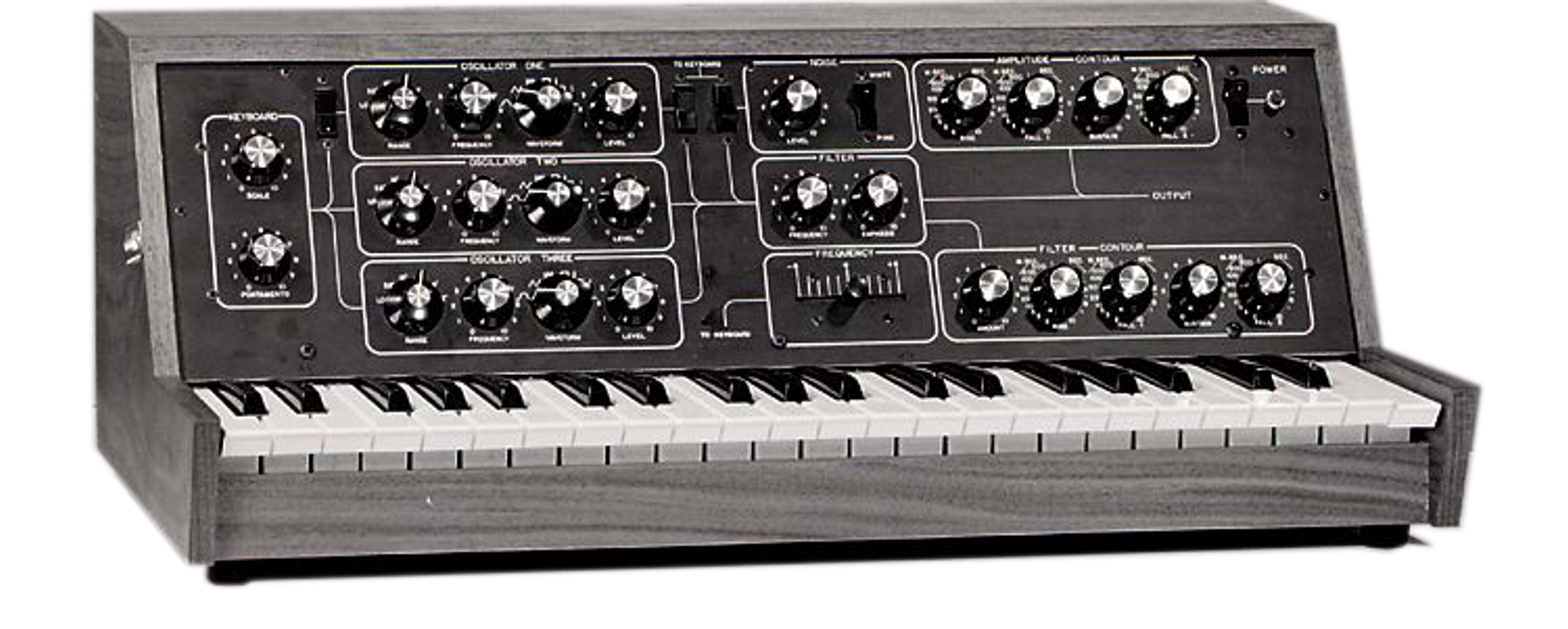
Borden was impressed enough by Hemsath’s advancement that he quickly adopted the use of the smaller synth for their live shows and early recordings. It was further confirmation that the young engineer might be on to something. A second prototype that featured a slanted front panel that accommodated a carrying case design appeared in due course. Afro- futurist jazz explorer Sun Ra turned up one day in Trumansburg and as he an entourage rolled out of town, the “Model B” went with him. It can actually be seen at various points in his infamous psychedelic sci-fi adventure film “Space is the Place.” At one point Moog suggested to in-house musician Jon Weiss that he drop by a Sun Ra gig in Manhattan to see how he was getting along with the instrument.
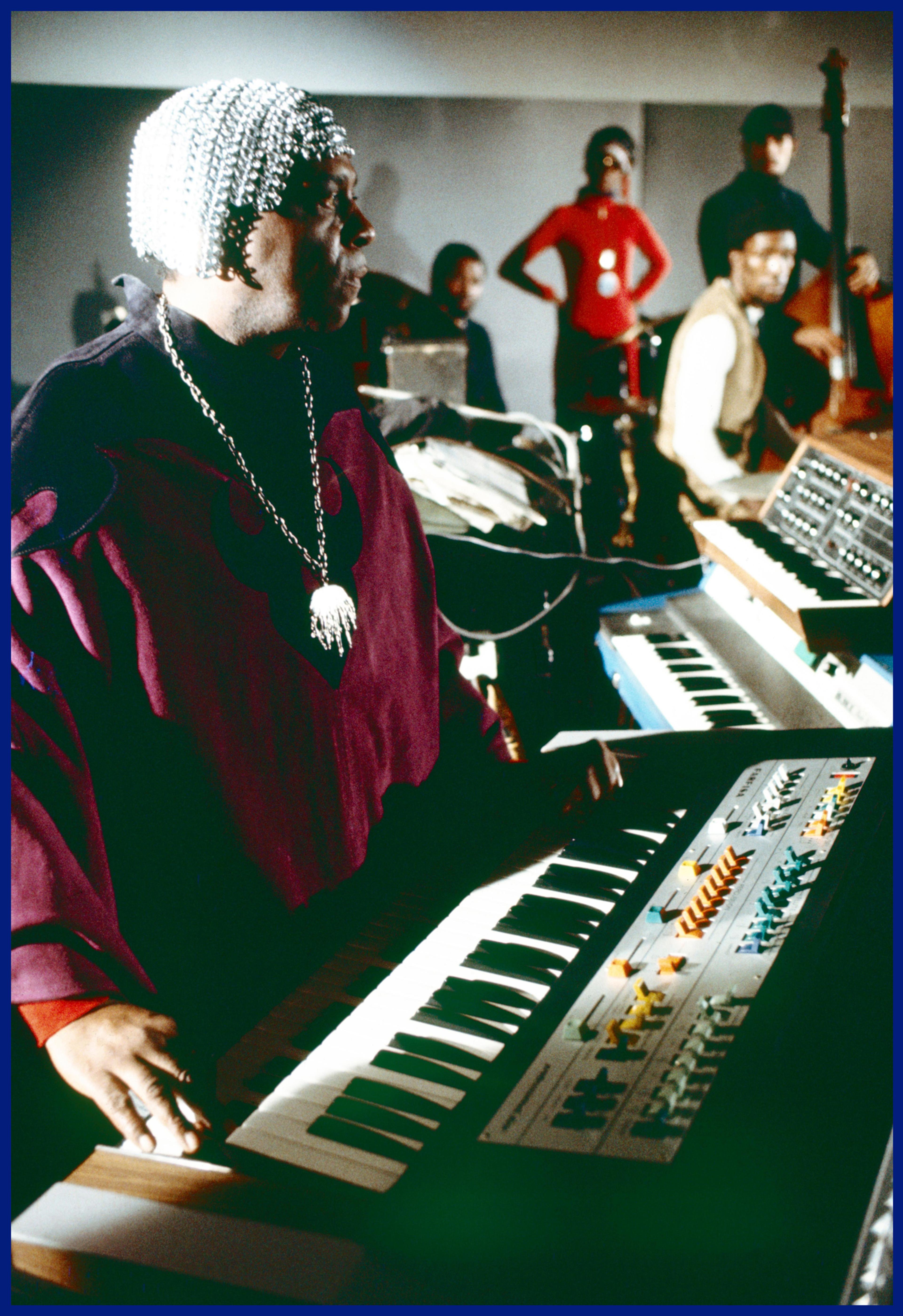
“Bob said ‘You might want to go down and see how he’s doing with that Mini.’ Whatever was going on that night, (it was like) the signals were coming in from Saturn. That’s how far out the sounds were. I’d never heard anything like that coming from a Minimoog.”
Having been somewhat successfully road tested, Moog began to work with his staff to refine the design of the instrument and push the viability of the idea further.
“You know the curious thing is we were we were cash starved,” Hemsath remembered “but when we decided to do the (Model) C Bob hired a consultant to come up with case drawings. They look like spaceships with curved backs…just lovely lovely things. I think they did like a dozen of those futuristic (designs). But down in the corner was this little square wooden box with a flip up lid and everybody said ‘I can make that. I can build that.’ So we threw out all of this curved stuff and Bob and I came in the next Saturday morning to the wood shop and we just started sawing wood.”
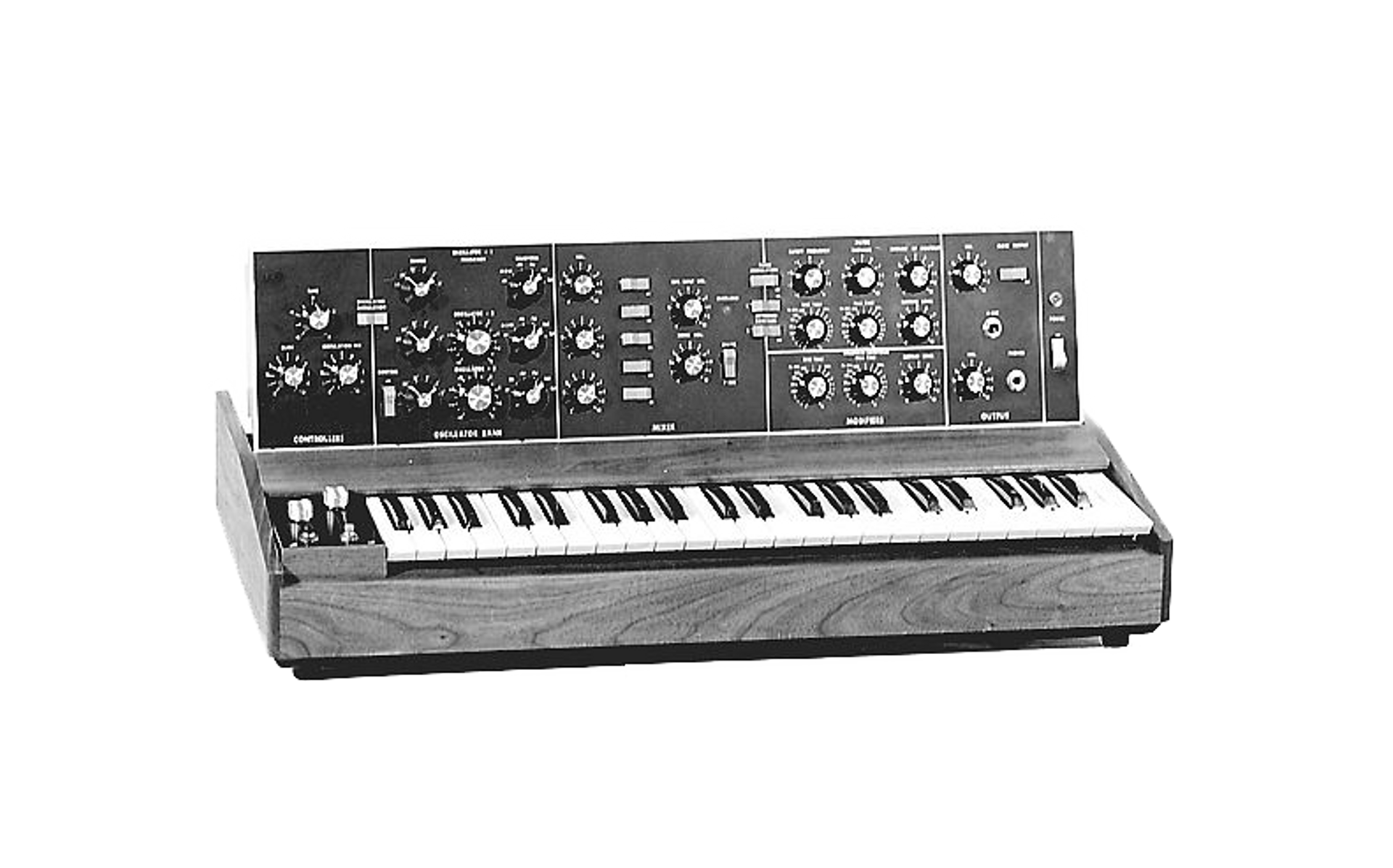
The Model C was still hand wired, but Moog’s personal involvement meant that the circuitry would be overhauled. Engineer Jim Scott quickly recognized that the instrument had a distinct output.
“We built four C Models…and with the first C Model when we got it running, we realized right away that overdriving the circuitry was key. (We were) simplifying Robert Moog’s original 1964 design. I took those circuits and adapted them, and the way I went about it turned out to be serendipitously, precisely the right way to do it to produce the best sound. (It’s) not what I had in mind at the time. I was just trying to get something that would work, so we could get a product to market.”
Another significant change at this stage was the addition of two sliders over on the left control section of the instrument to manipulate pitch and modulation. All the basics for a final production Model were in place, and Moog ordered his staff to produce more demonstration units while he went on the hunt for investors to prop up the company’s wilting finances. It was no secret to Moog’s staff that the big modular units that made their reputation were no longer keeping their balance sheets out of the red, so they decided to buck their instructions and start laying out the printed circuit boards they’d need to fully put their creation into production. When the boss got back to Trumansburg, he was less than pleased.
“It was the only time I saw Moog angry. He really really lost his temper,” Scott remembered.
Moog had marshalled his engineering staff into his office, to find out why they’d gone against his expressed wishes.
“It was a small office and we were all crowded in there,” says Scott. “And Robert Moog is pounding on his desk and using language that he definitely did not learn from his mother to describe his displeasure. He’s glaring at all of us and nobody said a word. All of us were checking to see how clean are fingernails were and counting the flies on the ceiling in order to avoid eye contact.”
Once he was able to put his wrath into the rearview mirror, Moog realized he was looking at a fait accompli and rolled up his sleeves. But before the final version of the synthesizer could meet the public, one key change was made to its design.”
“The Model C still had slide pots as I recall and they're not playable.” Hemsath recalls. “And when we came around to the D, I was really concerned with that.”
After experimenting with the idea of using joysticks, Hemsath and Moog’s purchasing agent Don Pakkala came up with a brilliant substitute.
“Together the two of us decided ‘Wheels! Yes!’ Pakkala came up with the the detents and the spring return for the pitch. The original wheels were made of quarter inch plexiglass. (He) just had a sheet of it and cut them out in the band saw. (Then he could) clamp about a dozen on together, put them on the lathe and make a facing pass on it and clean them up. So Don did all of the machining (and) jigging to mass produce the wheels and that's where those pups came from.”
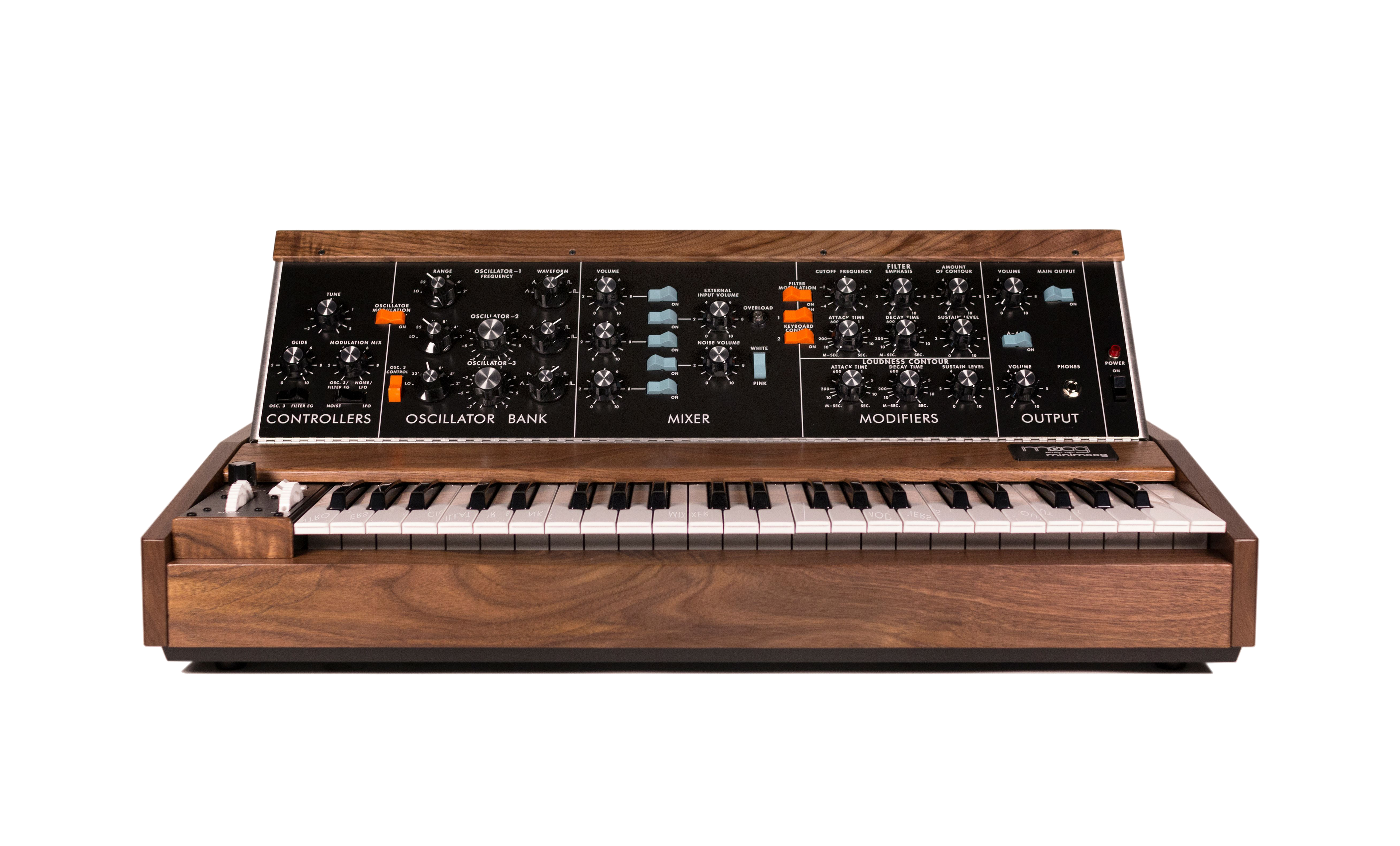
Hemsath’s and Pakkala’s idea was a master stroke, and would appear as a feature on most synthesizers going forward. The Minimoog was now ready. Bob Moog, still not completely convinced that they had made the right move told Jim Scott, “I doubt that we’ll ever sell 200 of these things.” The price? $1,195 or about $6,700 in today’s money.
Despite the stiff price, there was at least one enterprising salesman that “got” the revolutionary concept of a portable synthesizer that could be easily stacked atop any keyboard player’s established rig. David Van Koevering, a former preacher who had some renown as a Swiss bell ringer took to Moog’s instruments and soon became the Minimoog chief evangelist – selling them out of the trunk of his car like an old-fashioned door-to-door salesman.
“(Van Koevering) was literally the Johnny Appleseed of the Minimoog,” says touring keyboardist with The Who and Moog historian Brian Kehew. “He was taking it across country to music stores and musicians and one by one plonking it into people’s hands. He was always ready to sell you something, even if nothing was for sale. It was just the way he was wired having been a preacher and an evangelist since the early days. He believed in what he had. He knew that the Minimoog was the coolest new instrument in the world.”
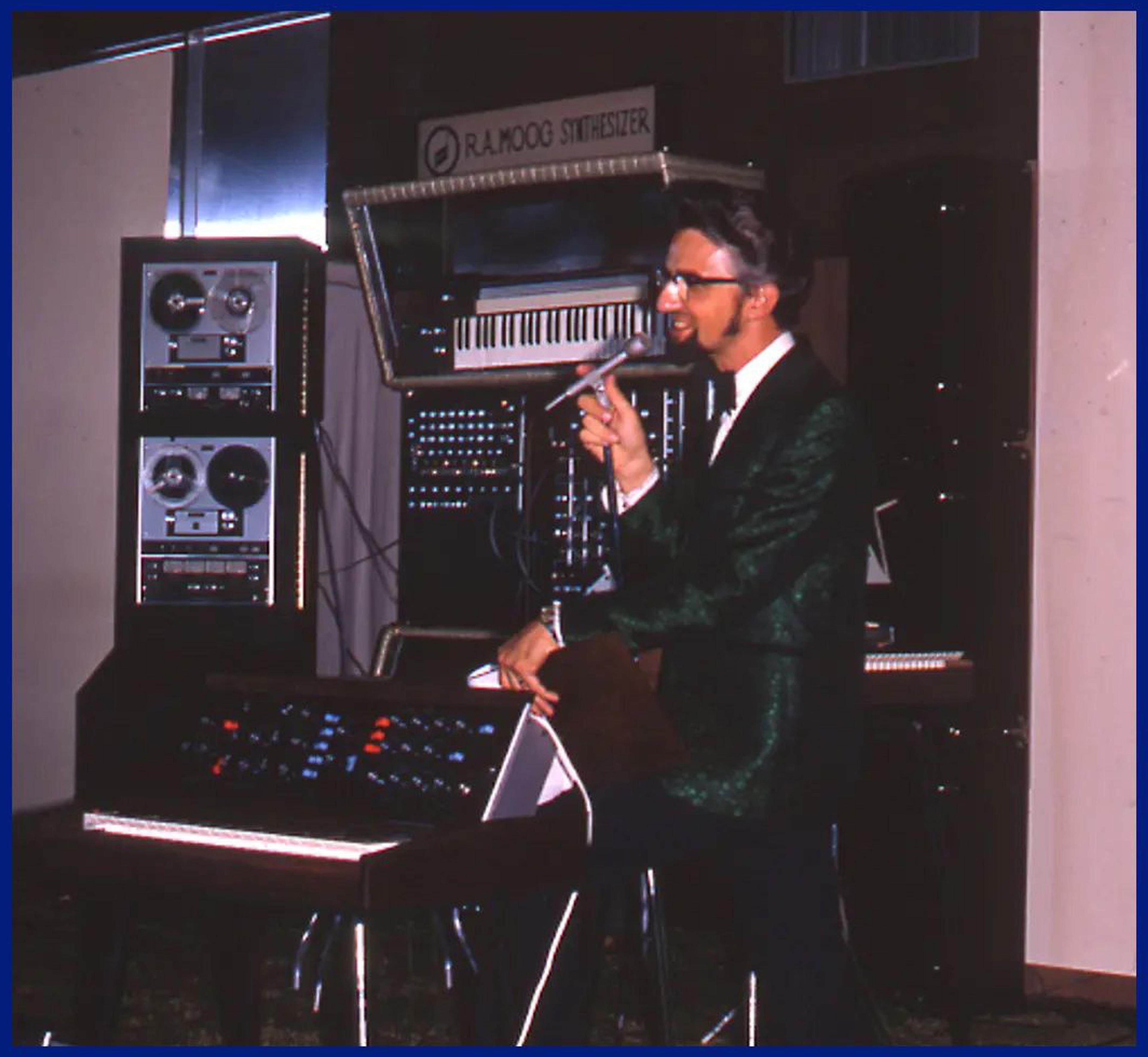
With the help of Taco Bell mogul Glen Bell, Van Koevering put together a happening that he called "Island of Electronicus" in early 1971 – a Moog showcase of sorts on the thin slip of land off the coast of St. Petersburg, Florida called Tierra Verde Island. Local musicians who flocked to the huge performance space that Van Koevering set up each got a close up look at the future of electronic sound from the groovy comfort of the bean bags strewn across the floor – each one a potential customer.
It worked, and Van Koevering could see that the market for the Mini was starting to bloom. But his burgeoning success with the Mini was enough to save the fortunes of Bob Moog’s cottage industry. Known throughout the music world and in the popular imagination as “the” synthesizer company, the only way of sidestepping bankruptcy was to sell. About six months after the first Minimoog was shipped out the door, the company was sold to a venture capitalist. Operations would soon shift out of Trumansburg to the Buffalo suburb of Williamsville, New York and Bob had to shed the mantle of CEO for a lead role in the research and development department.
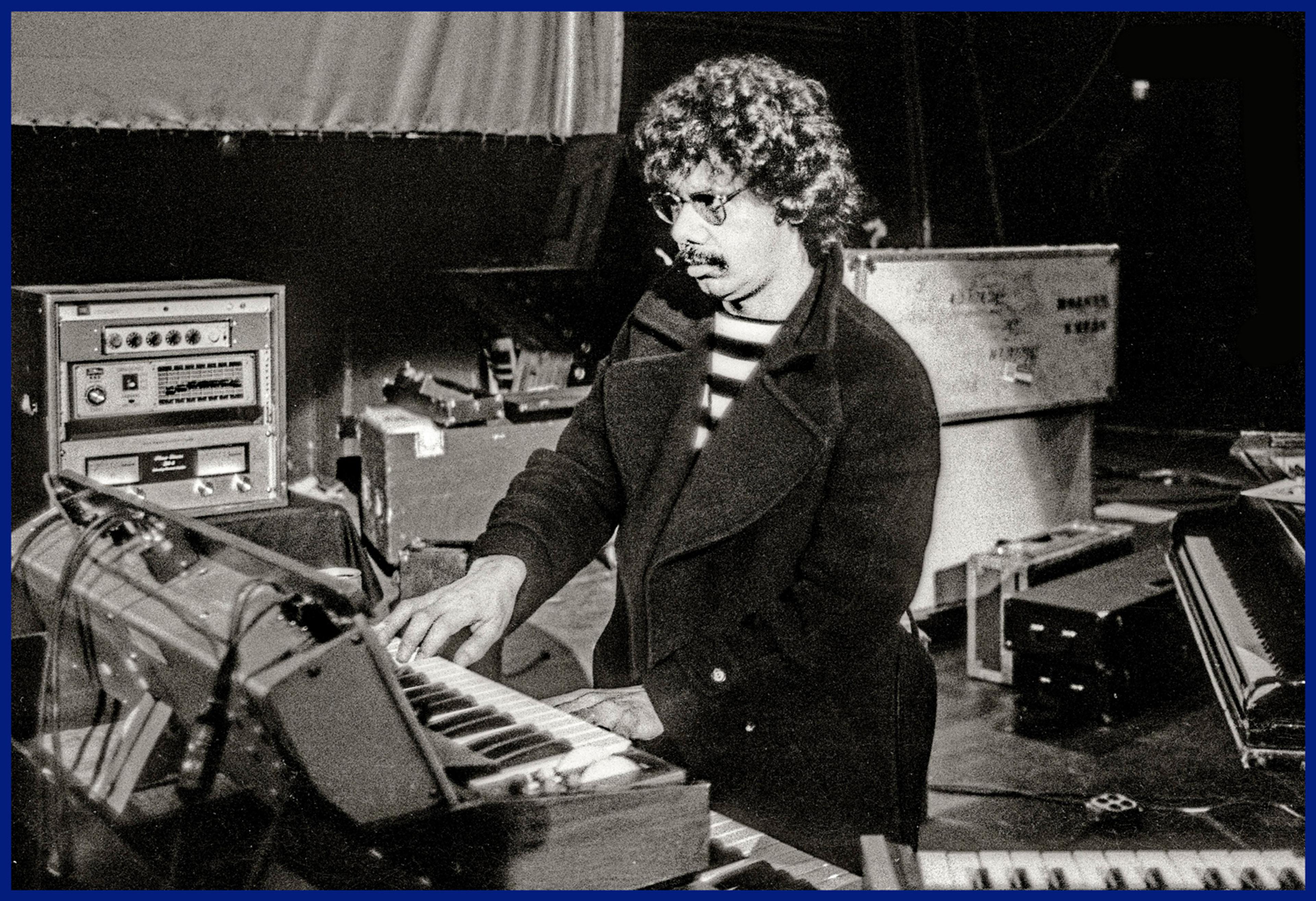
Those corporate shifts aside, the word was out and the Minimoog began to appear in some high-profile settings. When the BBC turned up to film Prog rock heroes Yes in October of 1971, a star-spangled Rick Wakeman stood in front of a brand new Model D. Keith Emerson plonked one on top of the Hammond L-100 he would literally knife on stage. It was also a featured instrument on the forward-thinking side of jazz – having been quickly adopted by Jan Hammer for use in the Mahavishnu Orchestra and later by Return To Forever’s heavyweight keyboardist, Chick Corea. The German bands who fell under the Krautrock moniker, like Tangerine Dream and most importantly Kraftwerk, embraced it as a staple of their underground sound. And if the arrival of the Minimoog wasn’t timely enough to save the fortunes of the R.A. Moog company, over the 11 years of its original production run (*), the Model D became as ubiquitous in popular music as the Fender Stratocaster.
But ultimately, it’s become the legendary instrument that it is because of one thing: its sound.
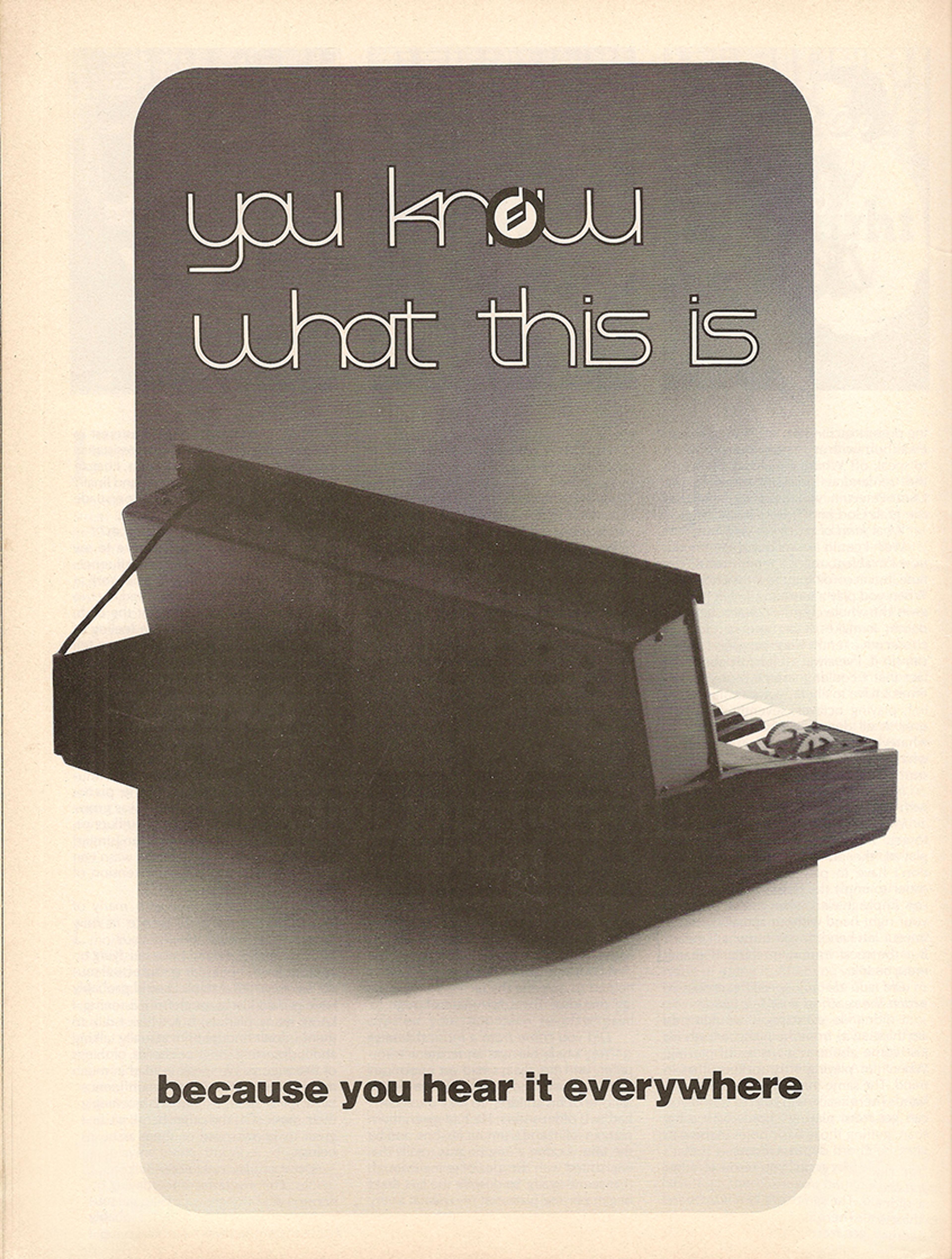
“You know what this is because you hear it everywhere.”